Artificial intelligence has moved from a talking point in business school lecture halls to a critical baseline in the job market. Today, employers expect MBA graduates to work fluently alongside machine learning tools and generative AI. Yet many traditional MBA programs — built long before these tools reshaped the market—are still playing catch-up.
Rather than treating AI as an afterthought, San Francisco Bay University designed its 100% online SFBU MBA Pro+ to be AI-enabled from the ground up. The curriculum was built by faculty who aren’t just teaching these changes, but are deeply embedded in the very industries being disrupted.
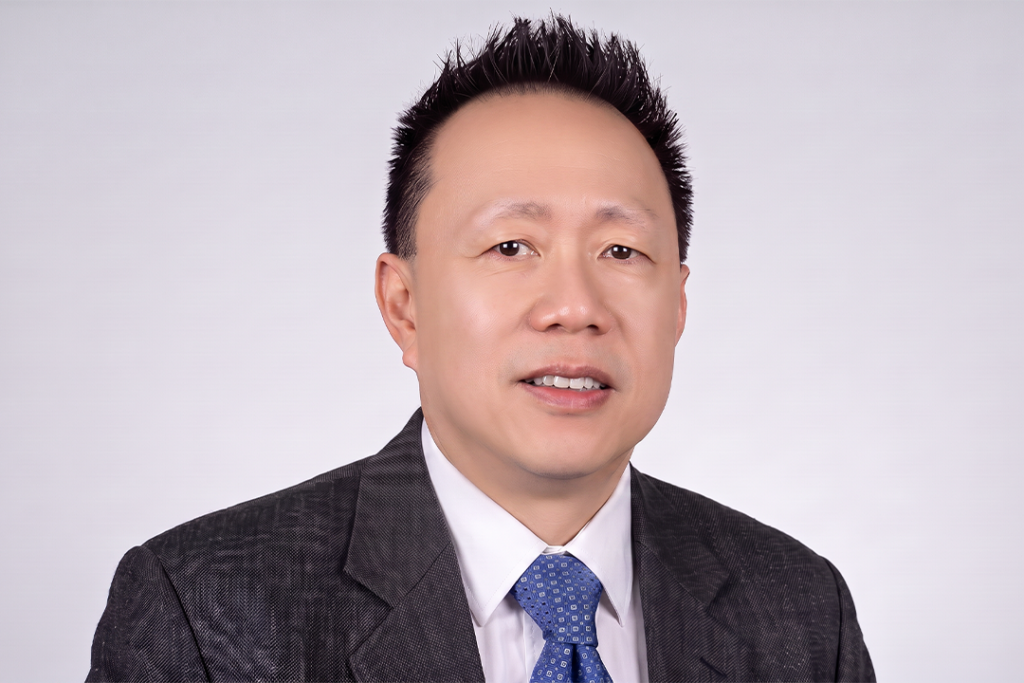
We sat down with Dr. Johnathan Mun, professor and chair of SFBU’s Business Division, to discuss what it takes to prepare business leaders for an AI-driven economy—and how SFBU’s faculty expertise makes that possible.
Transform Your Career With SFBU’s AI-Enabled MBA
Get Top Silicon Valley Education at a Fraction of the Cost
What makes the SFBU MBA Pro+ different from a traditional program?
The MBA Pro+ at San Francisco Bay University stands apart because it directly integrates cutting-edge industry tools into its fundamental structure. Mun points to the pervasiveness of artificial intelligence, machine learning, and large language models as the primary driver behind this pedagogic strategy. Aspiring business leaders, he argues, must build deep fluency with AI tools to stay competitive.
To support this, SFBU developed a co-intelligent platform—powered by its proprietary AI partner, Bayley—where AI avatars help guide coursework and continuously surface current developments in the field. “AI is going out there, crawling the web, crawling the latest and greatest technology and knowledge base out there in industry and bringing it to you, onto your computer,” Mun explains. “It is flexible; it is extensible; and it is modular.”
Where larger, legacy institutions struggle with bureaucratic delays, SFBU’s size allows for rapid innovation. “The nice thing about San Francisco Bay University and how we came up with this program is that we’re a smaller private university, so we’re flexible,” Mun says. While bigger universities must navigate faculty senates and multiple administrative layers before approving changes, at SFBU “quick decisions with quick turnaround can be executed fairly quickly.”
How does the Silicon Valley location shape the curriculum?
Headquartered in Fremont, California, SFBU operates inside the geographic core of Silicon Valley. For Mun, physical proximity to tech giants and AI trailblazers translates directly into degree value. “If you look at Silicon Valley itself, just within a 30-to-40 mile radius you’ve got hundreds, if not thousands, of large organizations, including companies like Tesla and Intel. You have OpenAI… you have Anthropic… and companies like Salesforce, for example.”
He also frames the region’s economic output in global terms. “If you make California into its own country… [it’s] approximately the fourth-largest economy in the world.”
Earning a degree in this ecosystem carries significant prestige. “We’re located in the heart of Silicon Valley where all the financial technology, the analytics, and all the latest AI technology comes from,” Mun says. “If you graduate from a university like ours, from Fremont, that creates a lot of heft. There’s a lot of value in your degree itself.”
What kind of faculty expertise stands behind the program?
Mun’s own background reflects the multi-disciplinary model SFBU brings to its students. In addition to chairing the Business Division and leading courses in financial management and managerial economics, Mun has spent 25 years teaching across 10 countries. He has authored 30 books, written roughly 150 academic articles, holds 13 patents, and has consulted for more than 50 multinational organizations.
That consulting work spans both public and private sectors. “I’ve consulted for the Department of Defense, Department of Homeland Security, the state of California… Northrop Grumman, Intel, GE, Airbus, Boeing, 3M, and others,” he says. “So we have a lot of expertise within the community—not just academic, but also applied expertise in the industry.”
This depth of experience extends across the entire department. Mun points out that “A lot of our faculty members are very well-published… Some of my fellow professors and faculty members have authored dozens of books as well.”
Beyond full-time faculty, SFBU incorporates active industry practitioners into its teaching rank and curriculum governance. “We have folks who come from Apple, folks who come from OpenAI, folks who have done consulting work around the world.” SFBU has also established an AI advisory board comprising computer science faculty, technology experts, and industry leaders — including advisors from OpenAI — to guide the program’s technological trajectory. The board’s mission is to keep students “ahead of the curve by integrating real-world AI advancements into the classroom. From emerging trends to transformative tools, their insights equip SFBU grads with the skills to lead in a tech-driven world.”
How does the program balance flexibility with accountability?
The MBA Pro+ operates under the PERS framework—a personalized, experiential, real-time, and scalable model designed for working professionals. “As a student, you can go at your own pace,” Mun says, noting that “there are certain days you’re not feeling up to it, or there are certain days where you have more free time and can accelerate your program of study as needed.”
That flexibility comes with structure attached. “There’s a time element to this,” Mun said. “You can have up to, say, eight weeks to complete a module. You may complete it faster, for instance, within four weeks. But regardless, you are required to complete a lot of the assignments, the readings.” Students also have access to what Mun called a ‘human-in-the-loop’ component: scheduled contact with actual faculty members, alongside virtual conferences with peers working through the same material.
Freed up to mentor, not repeat lectures
Automating standard lecture delivery through AI fundamentally changes how professors allocate their time. “I’m not in the classroom, replicating everything I do in a semester again and again,” Mun says. “That frees me up to do a lot more research work, and also to mentor students.”
That mentorship, he said, often centers on career questions students bring to him directly. “If you have any issues in terms of career development, what does it mean to be in consulting? What’s the first step? How do I get started? If I’m interested in the area of, say, finance or accounting, how do I become a chartered public accountant?” With more time available, he said, “we have a lot more freedom, a lot more time to have these types of conversations and engage in one-on-one mentorship.”
Asked what success looks like to him, Mun returned to that same one-on-one contact. “Success for me in the MBA Pro+ program is very simple,” he said. “It’s when students connect with me when I’m the human in the loop, where I actually do seminars… and the students look me in the eye and tell me that they’ve actually learned material.” He added: “Success is not by numbers in terms of quantity, but it’s in terms of quality, the quality of experience for the students.”
A curriculum that keeps pace with the field
More than 16,000 hours of transdisciplinary design went into building the MBA Pro+ coursework before launch. Every course follows a Think → Do → Create framework, guiding students from fundamental theory to applied business deliverables that form a career-ready portfolio.
Because AI tools evolve continuously, the SFBU MBA Pro+ is structured around modular courses—such as AI 501 (Management and Leadership in AI)—that can be updated dynamically. “If you know anything about AI and LLM models, every month or so you see new tools and organizations come to fruition,” Mun says. “Being modular, we’re able to adapt and make changes very, very quickly to the curriculum.”
At $10,000 total tuition under a pay-as-you-go model, the program combines accessibility with top-tier Silicon Valley expertise. As Mun puts it, “The return on investment is huge, massive, significant. And you’re getting high quality—the best quality out there—at a fraction of the cost.”
Prospective students can learn more about tuition, admissions requirements and upcoming start dates on SFBU’s MBA Pro+ tuition and admissions page or request more information to begin the application process.