Graduate business education is at a turning point. As tuition costs climb and artificial intelligence transforms the workforce, the value of an MBA is no longer defined by the title on the diploma. It’s defined by the proof behind it: the practical capabilities, sharp strategic vision, and real-world work a graduate brings to the table.
Most institutions are responding to these changes slowly, if at all. San Francisco Bay University is betting it can move faster. The private, nonprofit, WASC-accredited university in the heart of Silicon Valley has built its new SFBU MBA Pro+ around a wager that skills, relationships, and applied work matter more than a transcript and that artificial intelligence, used deliberately, can make a graduate program more human rather than less.
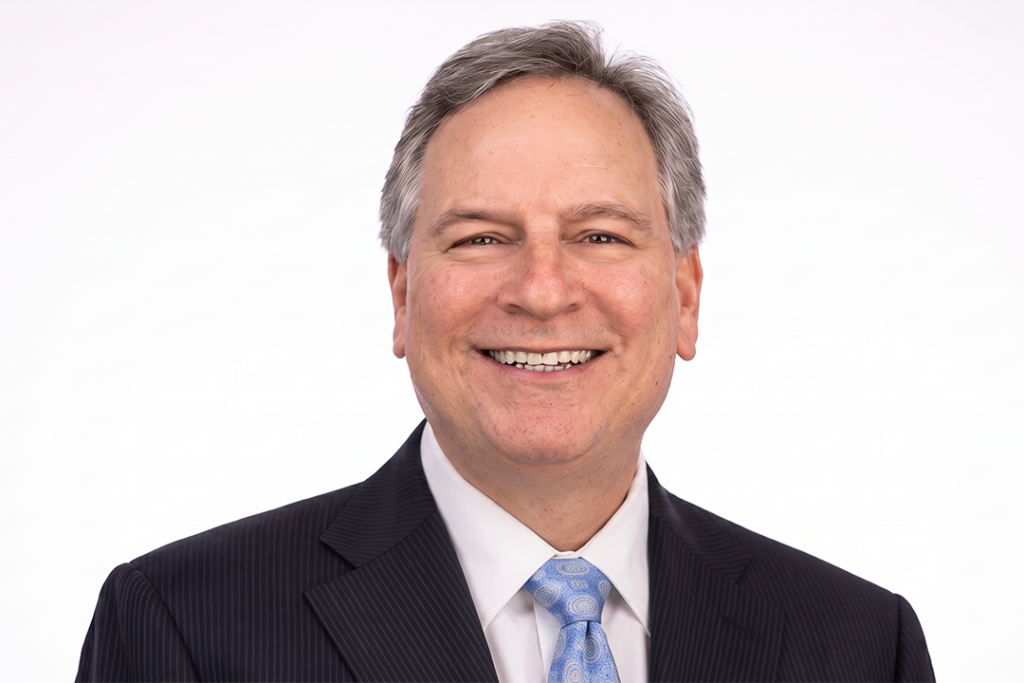
We sat down with SFBU President Nick Ladany to talk about why he believes graduate education needs a rethink, what he means by calling SFBU a “challenger brand,” and how that conviction shaped the design of MBA Pro+.
Earn a Silicon Valley MBA for $10K
Master AI-Powered Business Education
Why SFBU Built the MBA Pro+
Ladany frames the program less as a product launch than as a correction to something he sees missing across graduate education generally.
“The Pro+ programs offer another way for us to bring higher education to people that have traditionally not had access,” Ladany said. “It actually allows all students the opportunity to engage in an educational experience that’s both meaningful and life-changing. It’s not just education for education’s sake but, rather, education for skills-based sake, which, frankly, is something many universities don’t do.”
That skills-first framing permeates Ladany’s vision of the program, from its price point to its use of artificial intelligence to how it measures whether it’s working.
A Challenger Brand’s Case for Disruption
Ladany doesn’t shy away from positioning SFBU as an outsider pushing against the grain of traditional higher education.
“We call ourselves a disruptor or challenger brand,” he said. “We really believe in changing higher education. We are the future of what higher education will look like.”
Part of that positioning is financial. MBA Pro+ carries a total tuition of $10,000, paid course by course rather than in a lump sum. “We actually do provide affordable education,” Ladany said. “The goal is to give folks access.”
Affordability isn’t the sole, or even the most significant, differentiator. “We’re not just affordable,” he said. “We offer wraparound services for our students. We engage with students.”
Ladany also points to institutional agility as a competitive advantage, one he says larger, more bureaucratic universities can’t easily replicate. “The joke in higher education is that most higher education processes move at the pace of a glacier,” he said. “We move at paces that I’ve never seen in higher education. If there’s something new happening in the world, we can move within minutes to integrate it; it’s built into the way we’ve structured our courses.”
Blending AI With Human Insight
Ask Ladany about SFBU’s use of artificial intelligence and he immediately reframes the term. “At San Francisco Bay University, we are blending AI with HI,” he said. “AI, as we know, is artificial intelligence. HI is human insight, human interaction, human innovation.”
This approach utilizes a co-intelligent ecosystem, which Ladany describes as built to preserve, not replace, human relationships. “A co-intelligent ecosystem means we build out this ecosystem of learning that provides AI intelligence with human-centered design as the backbone. It allows human faculty to interact with students in a meaningful way,” he said. “It’s all about meaningful change and meaningful learning for students. That’s critical for us. The goal is to build a future of humans doing what we do best with one another, with technology helping us learn in important ways.”
In practice, the Pro+ approach employs technology to deliver something that approaches individualized instruction at scale. “Human-centered design really is the ultimate level of personalized education,” he said. “If we have 20 students in a classroom, there are 20 different versions of learning and teaching going on, each personalized to the individual student. We meet students where they are and we bring them along in a learning experience that does more than teach the content; it drills down to the experience that they can use for whatever future business or professional endeavor that they have in mind.”
Trust, Guardrails and a “Closed System”
Any program built around AI-driven instruction invites an obvious question: how do you keep it from going wrong? Ladany’s answer centers on containment and testing rather than open-ended deployment.
“AI is getting both too much positive press and too much negative press, in my opinion,” he said. “There are absolutely valuable things that AI can help us with. And there are things where AI can hurt us. What we’ve done is create a closed system — meaning that the faculty and staff are always monitoring what the AI is doing—where we use the benefits of AI to the advantage of the student.”
To build that system, “SFBU has invested over 16,000 hours of human-centered design into the AI. Faculty and learning designers are all part of what we’re trying to build here.” To fine tune its instructional delivery, Ladany explains, “We pressure test the AI ahead of time. Thousands and thousands of hours have gone into ensuring that if a student says something that could set the AI off the rails, the AI knows to bring it back.”
Tangible Skills Over a Framed Degree
Ladany’s clearest break with conventional graduate education surfaces in how he talks about what students leave with. It isn’t, in his telling, primarily the degree itself.
“It’s important that graduate students leave with tangible artifacts because that provides them the skills to advance them in their professions,” he says. “I’ve worked in graduate education my entire professional career,” with experiences that span “big public universities, small private institutions, small liberal arts colleges.” Ladany observes that “The one common element across all these institutions is they provide very few tangible artifacts that students can use to advance their future careers. We should expect more from institutions, and that’s what we’re doing here at San Francisco Bay University.”
He put a similarly high value on the relationships students build along the way, spotlighting SFBU’s network of more than 13,000 alumni concentrated in Silicon Valley. “When you leave here, you’ll have a degree, but the degree is not the thing you’re going to carry with you,” Ladany said. “In fact, you’re probably never going to carry your degree again. You should put it on your wall; you should honor and celebrate it; everyone should cheer you when they come into your home. But, what you’re really leaving with that’s most critical is the relationships you make with other people: your cohort, your faculty and the network of professionals that you’re going to create while you’re in this program.”
A First Cohort, and a Personal Definition of Success
MBA Pro+ evolves a degree program SFBU has taught on campus for years and online since 2021. Ladany is refreshingly candid about what this pivot means: early cohorts are taking a leap on an unproven model. But where others might hedge, Ladany sees opportunity. In his view, that pioneering spirit isn’t a liability to downplay—it’s a core advantage of the experience.
“When I think about the first SFBU MBA Pro+ alums, they are the pioneers,” he said. “They’re the ones that tried something that no other educational institution is trying. They’re the ones that are going to set the standard for the future.”
He also described a program built to constantly evolve based on what it learns from students, not just before launch but continuously. “We have built in a refinement, a feedback loop on everything that we do to make sure that learning is working,” Ladany said. “If students aren’t learning, then we’ve not done something well. We don’t believe, for example, if students have trouble learning, that it’s on the student.”
Asked how he’ll ultimately judge whether MBA Pro+ succeeded, Ladany didn’t point to enrollment figures or completion rates first.
“What I’m looking for is the cheering and the excitement when the student graduates,” he said. “When they’re wearing their cap and gown and their family is looking at them, and they know they’ve accomplished something that no one else could have accomplished—and, frankly, that they may have thought they never could accomplish. At the same time, I want to ensure their learning experience gives them the tools and opportunities for the jobs they want. Those outcomes are the ones that are most meaningful.”
For prospective students weighing whether a nontraditional MBA is worth the investment, that combination—a $10,000 price point, a Silicon Valley network built over decades, and a president willing to stake the program’s success on outcomes rather than credentials — is the value prop.
Learn more about the curriculum and Think → Do → Create learning model and on tuition, admissions requirements and upcoming start dates on the SFBU MBA Pro+ site, where you can also learn more about SFBU’s mission and accreditation and meet the university’s broader leadership team. Speak with an enrollment advisor to learn more about how the program meets your needs, or start your application today if you’re ready.